The Gog and Magog Prophecy of Ezekiel 38–39
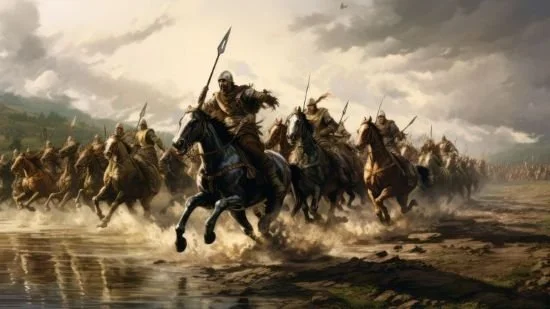
In light of yet another war raging in the Middle East–this time between the United States and Israel against Iran and its Revolutionary Islamic Government, appeal is made by dispensational prophecy pundits to the prophecy of Gog and Magog found in Ezekiel 38-39. Ezekiel supposedly predicted the war in Iran–as Greg Laurie claims in but one of a scad of recent YouTube pundits making the same claim.
In a time of fear and uncertainty brought about by war, it may be comforting to think that biblical prophecy is being fulfilled through these events—which can only mean that the rapture must be soon at hand. It is also a way to attract followers, get clicks, and sell books. People are worried and want answers. If pundits can claim this is the fulfillment of biblical prophecy, what can be more reassuring than that?
But this repeated use of Ezekiel 38-39 to explain the wars and rumors of wars in the Middle East has a number of serious interpretive weaknesses. What are these weaknesses? How has this prophecy been understood by dispensationalists in the past? And if the dispensational reading of the passage is not the correct one, how then should we understand the passage?
An Interesting History of Interpretation
Since the mysterious Gog and Magog are associated with a persecuting empire depicted in Ezekiel’s prophecy as being destroyed at the time of the end—the same holds true in the Book of Revelation (Rev. 20:8)—Gog and Magog have often been tied to the political powers which arise in conjunction with speculation about the future appearance of Antichrist.[1] Martin Luther once referred to the Ottoman Turks, then at the gates of Vienna, as Gog’s forces soon to come under the judgment of God.[2]
Dispensationalists of a previous generation equated the names that appear in this passage (Gog, Magog, Rosh, Meshech, Tubal, and Gomer, Ezek. 38:2–6 NASB) with nations of modern Europe in some sort of alliance with the Soviet Union (now the nations of the former Soviet Union). According to Hal Lindsey, Gog and Magog are supposedly tied to Russia (Rosh supposedly equals “Russia”) while Meshech is identified as “Moscow” and Gomer as “Germany,” all of whom will form an alliance with Ethiopia (Cush) and Libya (Put) and invade the modern nation of Israel, now back in the land, sometime toward the end of the seven-year tribulation.[3] But historian-archeologist Edwin Yamauchi thoroughly refuted the claim that Ezekiel is referring to the modern nation of Russia and the city of Moscow when the prophet uses these names.[4] His work was simply ignored by advocates of the “Russian Invasion” theory. “Hey Yamauchi, I’m trying to sell books here, don’t scare people off with the facts.”
This so-called “Russian invasion of Israel,” long a feature of dispensational prophetic speculation, now serves as an embarrassing reminder of the problems with tying current events to biblical prophecy. Geopolitical realities have long thwarted dispensational predictions. This lesson has not been learned by the current prophecy punditry. It is a good thing for them that their audiences have a short memory. How many times have such predictions been made, failed to come to pass, with the punditry shamelessly moving on to the next prediction based upon the same misreading of the same biblical passages as though they got nothing wrong the last time?
How Should We Understand Ezekiel’s Prophecy?
This section of Ezekiel’s prophecy is “proto-apocalyptic,” and therefore should be seen as a reference not to any specific modern alliance of nations who will invade Israel but as symbolic of those godless powers that arise at the time of the end who persecute the people of God but who are destroyed by Christ at his second coming (cf. Rev. 20:8).[5]
This can be seen in a brief look at some of the key elements of the prophecy. The first six verses of Ezekiel’s prophecy read as follows:
The word of the Lord came to me: “Son of man, set your face toward Gog, of the land of Magog, the chief prince of Meshech and Tubal, and prophesy against him and say, Thus says the Lord God: Behold, I am against you, O Gog, chief prince of Meshech and Tubal. And I will turn you about and put hooks into your jaws, and I will bring you out, and all your army, horses and horsemen, all of them clothed in full armor, a great host, all of them with buckler and shield, wielding swords. Persia, Cush, and Put are with them, all of them with shield and helmet; Gomer and all his hordes; Beth-togarmah from the uttermost parts of the north with all his hordes—many peoples are with you.
Gog is said to be a leader of a group of nations who disrupt the peace of God’s people, who are safely living back in the land after a prolonged time of exile. But the essence of the prophecy—which comes in the form of seven oracles[6]—is not that the people of God are judged by an invasion of these nations. Rather, it is God who judges the nations by summoning them to this place for judgment.
In Ezekiel 38:14-16, we read of an invasion of Israel from the north by those summoned to judgment by God at an unspecified future time.
“Therefore, son of man, prophesy, and say to Gog, Thus says the Lord God: On that day when my people Israel are dwelling securely, will you not know it? You will come from your place out of the uttermost parts of the north, you and many peoples with you, all of them riding on horses, a great host, a mighty army. You will come up against my people Israel, like a cloud covering the land. In the latter days I will bring you against my land, that the nations may know me, when through you, O Gog, I vindicate my holiness before their eyes.”
The fate of Gog and his cohorts is also clearly spelled out in verses 19–23
For in my jealousy and in my blazing wrath I declare, On that day there shall be a great earthquake in the land of Israel. The fish of the sea and the birds of the heavens and the beasts of the field and all creeping things that creep on the ground, and all the people who are on the face of the earth, shall quake at my presence. And the mountains shall be thrown down, and the cliffs shall fall, and every wall shall tumble to the ground. I will summon a sword against Gog on all my mountains, declares the Lord God. Every man’s sword will be against his brother. With pestilence and bloodshed I will enter into judgment with him, and I will rain upon him and his hordes and the many peoples who are with him torrential rains and hailstones, fire and sulfur. So I will show my greatness and my holiness and make myself known in the eyes of many nations. Then they will know that I am the Lord.
Previously, dispensationalists understood Ezekiel to be referring to an end-times invasion of Israel after the nation has resettled in the land after being reestablished as a nation in 1948. Thus Russia and allied Arab nations—enemies at the time—were understood to be key participants in the God and Magog attack. This invasion supposedly takes place after the rapture of the church, some time toward the latter half of the seven-year tribulation.[7] In light of recent events many of the punditry see this passage as a reference to current events in the Persian Gulf, having moved on from the failed Russian-Arab invasion hypothesis. Now Ezekiel is talking about Iran.
The New Testament Must Be Allowed to Interpret the Old
Regardless of the attempts to connect this prophecy to current events, there are a number of reasons why the dispensational view of this prophecy is untenable. For one thing, the Book of Revelation clearly assigns (and indeed reinterprets) this prophecy as being fulfilled in connection with our Lord’s second advent (Rev. 20:7–10). If, as dispensationalists teach, Gog and Magog are involved in an invasion of Israel during the seven-year tribulation, only to be destroyed by God, how can they appear again at the end of the millennium when the final judgment takes place? This violates the dispensationalist’s self-professed literal hermeneutic, for the Gog who supposedly falls on the mountains of Israel (Ezekiel 38–39) has been resurrected by the end of the millennium (Rev. 20:8). If we go by the basic principle that the New Testament interprets the Old Testament, then it becomes clear that Ezekiel is looking ahead to the future and the time of the end—Christ’s return, the general resurrection, the final judgment, along with the ushering in of a new heaven and earth.
But two things have happened in the meantime. First God’s people have come back from exile and are now dwelling in safety. Second, after a long period of time, Ezekiel sees some type of a divinely orchestrated invasion of the land where God’s people dwell, bringing an end to God’s enemies once and for all. This is clearly an apocalyptic vision of the messianic age, when Christ’s people dwell in safety and will be delivered from their final foe.[8]
Although the name “Gog” has some historical connection to Ezekiel’s prophecy, the name is more than likely used in a proverbial sense of an end-times foe—i.e., “another Hitler.”[9] When John sees this same scene from the perspective of the heavenly vision, Gog and Magog have become symbols of all the nations who come from the four corners of the earth to wage war upon the saints. Whereas Ezekiel spoke of the saints involved in terms of the nation of Israel and the city of Jerusalem, John now speaks of the “camp of God’s people, the city he loves” (Rev. 20:9). John has already reported the fulfillment of this prophecy in Revelation 16:14–16 and 19:17–21, only now we learn that Gog and Magog suffer the same fate as the beast and false prophet who has deceived them. “Fire came down from heaven and devoured them.”[10]
Therefore the prophecy of Gog and Magog in Ezekiel 38–39 does not deal with a “Russian” invasion of Israel, nor the current war with Iran. But at the very least, the vision does depict the fate of those who are allied with the beast in his futile effort to wage war upon the saints (see Rev. 16:12–16) at the time of the Lord’s return.
Note: Taken from my book, The Man of Sin, and edited and updated for publication here.
__________________________________
[1] McGinn, Antichrist, 91, 96, 99, 140, 157, 178, 182.
[2] Cited in Leslie C. Allen, Ezekiel 20–48, Word Biblical Commentary, vol. 29 (Dallas: Word,1990), 210–11.
[3] Lindsey, Late Great Planet Earth, 59–71. See the discussion of the role this interpretation of Ezekiel 38–39 has played in dispensational prophetic circles in Boyer, When Time Shall Be No More 152–180.
[4] Edwin M. Yamauchi, Foes from the Northern Frontier: Invading Hordes from the Russian Steppes (Grand Rapids: Baker, 1982), 19–27. Rosh does not refer to Russia; it is a title, “prince.” Meshech and Tubal are connected to the Hittites and were fierce warriors. Yamauchi describes the difficulties associated with identifying Gog with any specific ancient empire or person and notes that there never has been any consensus about who or what is involved. Most commentators associate Gog with Gyges, king of Lydia in the seventh century BCE. Compare Beale, Book of Revelation, 1025.
[5] Allen, Ezekiel 20–48, 210–11; Beale, Book of Revelation, 1022–26.
[6] Allen, Ezekiel 20–48, 202.
[7] Charles Feinberg, The Prophecy of Ezekiel (Chicago: Moody, 1978), 218.
[8] Allen, Ezekiel 20–48, 210.
[9] Beale, Book of Revelation, 1025.
[10] Beale, Book of Revelation, 1022–23; Vos,Pauline Eschatology, 110–111.