“No Assurance of Final Perseverance” — The Rejection of Errors, Fifth Head of Doctrine, Canons of Dort (5)
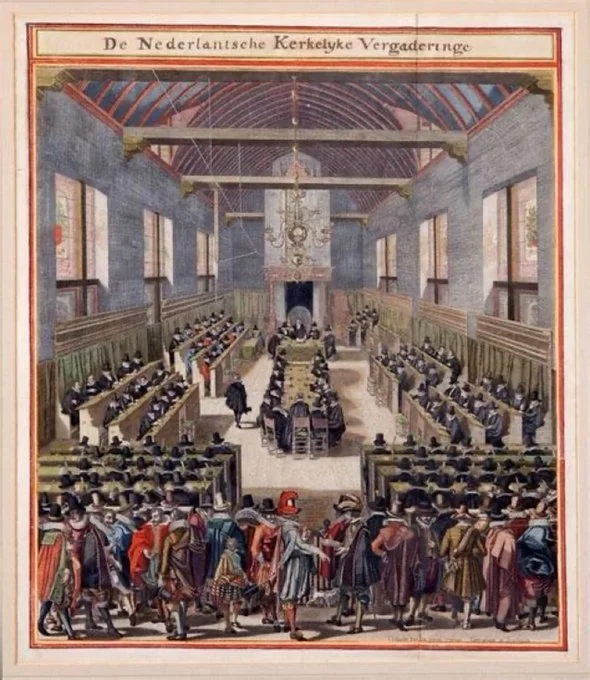
Having set forth the orthodox teaching, the Synod rejects the errors of those
Who teach that apart from a special revelation no one can have the assurance of future perseverance in this life.
For by this teaching the well-founded consolation of true believers in this life is taken away and the doubting of the Romanists is reintroduced into the church. Holy Scripture, however, in many places derives the assurance not from a special and extraordinary revelation but from the marks peculiar to God’s children and from God’s completely reliable promises. So especially the apostle Paul: “Nothing in all creation can separate us from the love of God that is in Christ Jesus our Lord” (Rom. 8:39); and John: “They who obey his commands remain in him and he in them. And this is how we know that he remains in us: by the Spirit he gave us” (1 John 3:24).
________________________________________
One of the things which should occur to us as we work through these refutations is that many of the errors of the 17th century Dutch Arminians are the same as those taught by the Roman church. In the Sixth Session of the Council of Trent (1547), we read the following. “As if it were true, that he who is justified, either cannot sin any more, or if he do sin, that he ought to promise himself a certain repentance; for except by a special revelation, it cannot be known whom God hath chosen unto Himself.” The Canons correctly identify the error here—the assurance of one’s final salvation cannot be known—a view held in common by Romanists and the Arminians. A doctrine isn’t in error merely because Rome affirms it, but the fact is that this error points us in the direction of a common ancestor to both Romanism and the Arminians in one branch of the Christian theological family tree—semi-Pelagianism.
Semi-Pelagians hold (with Roman and Protestant variations) that God’s grace is generic (non-specific) and available to all through an act of the will. Once such grace is “appropriated” (activated), it is now possible for those dead in sin to trust in Christ and subsequently be born again (regenerate). Regeneration follows from the exercise of faith. So, if the semi-Pelagian logic holds, since we obtain grace through an act of our wills, so too, we can lose regeneration through an act of the will. The need for this “fifth head” of doctrine to be promulgated by the Synod of Dort, makes it clear that this is the Arminian view—grace, and salvation can be lost.
Both Rome and the Arminians, therefore, are predisposed to reject any line of argumentation which holds that true believers cannot fall away. They worry that teaching such a thing will make Christians lax and disposed not to do good works since there is no need (according to the Arminian mischaracterization of the Reformed teaching on this) to do so to maintain one’s standing before God. If true, how can it be said that at no future (and as yet unforeseen) point will a Christian cease to believe or commit a sin which severs them from Christ. Such an understanding led John Wesley (perhaps the most famous of all Arminians) that the proper motivation for the Christian life was fear of punishment and the hope of reward.
The Canons respond to this error by simply citing those biblical passages which teach the opposite thing: Romans 8:39, and 1 John 3:24. And as has been made clear throughout, none of this depends upon us—an act of will—but upon the present mediatorial work of Christ who will lose none of his sheep (John 10:28), and who will secure the salvation of all those given hm by the Father (John 17:12).