Meredith Kline on Common Grace and Millennial Views -- Pre and Post
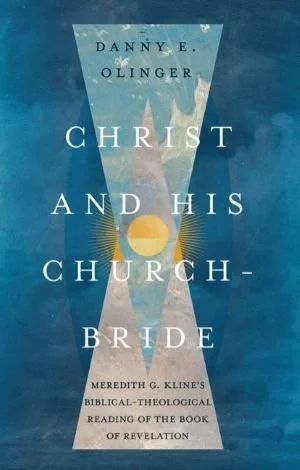
Danny Olinger’s new volume on Meredith Kline’s views on the book of Revelation is turning out to be an exegetical gold mine—as expected. Note: Olinger’s book sold out quickly—another batch coming.
When considering Kline’s debate with J. Ramsey Michaels in the Westminster Theological Journal in the Fall of 1996—Michaels defended a premillennial reading of Revelation 20:1-10—Olinger raises an important point about the way Kline’s understanding of common grace impacted his evaluation of millennial views.
Kline expressed concern that the millennial question was too often debated apart from the larger context of the Reformed system of doctrine. Olinger points out that “of special interest” in Kline’s thinking, “is the way the doctrine of common grace fares in different millennial reconstructions, for the doctrine is a cornerstone of the Reformed view of history.”[1] Kline opposed the premillennial view of the first resurrection in Revelation 20:4-6,[2] as well as for another reason raised by Olinger—Kline’s view that premillennialism was in conflict with the Reformed understanding of common grace.
According to Kline, premillennialism fails to grasp the significance of the Noahic covenant in Genesis 8:15-9:17, which reveals that God rules the earth while extending a measure of earthly blessings (common grace) to believers and unbelievers alike. But premillennarians, who contend that Jesus returns to establish a millennial kingdom of a thousand years’ duration, necessarily hold “to a theocracy on earth before the consummation, a universal kingdom of Christ in which those blessings hitherto received in common by all men and often in greater measure by the unjust than the just are no longer apportioned according to the principle of common grace but according to a policy of special favor to the people of God.”[3] Olinger points out the difficult problem this raises for premillennarians. “The redeemed in premillennialism are already in possession of glorified natures and experience their public vindication over against the wicked, a contradiction of God’s covenantal guarantee in Genesis 8-9.”[4] The presence of redeemed saints in a millennial age established by our Lord at his return leads to other serious unintended consequences—such as the presence of evil in the millennium—as I have pointed out here.
Kline’s appeal to the Reformed view of common grace also poses a serious challenge to certain forms of postmillennialism. Postmillennarians contend that “Christ does not return with the glorified church until after the millennium and meanwhile the millennial kingdom is a state-kingdom.”[5] Olinger identifies the consequence of such a move. “Like premillennialism, postmillennialism is in conflict with the doctrine of common grace when it locates the messianic kingdom prophecies in an earthly millennial kingdom where the universal ideal of old covenant law is realized. Consequently” writes Olinger, “consistent postmillennialists interpret the Mosaic covenant that God gave to Israel as the constitution for the Old Testament theocratic kingdom as the constitution for the ordinary state kingdom.”[6] Kline put the matter this way. “What was meant to apply to the special redemptive institution of the theocracy—the demand to confess God, the guarantee that obedience to the covenant stipulations will be rewarded with earthly prosperity, etc.—must all be regarded by the postmillennialist as normative for the state, any state.”[7]
Ignoring the role of common grace when determining millennial views results in “the undue mixing of the biblical concepts of the common and the holy . . . what common grace makes secular is sacralized and that the old covenant theocracy makes sacred is secularized.”[8] Kline concluded that “it appears then that certain varieties at least of premillennialism and postmillennialism are not compatible with the biblical doctrine of common grace, so important to Reformed theology. The amillennial position, on the other hand, is altogether consistent with it.”[9]
In light of the points raised by Kline and summarized by Olinger we can say in summation:
1). Millennial views ought to be determined in light of one’s larger theological system. It is highly problematic to take a millennial stance as though such a decision can be properly made independently from one’s theological system.
2). Millennial views reflect one’s understanding of the course of redemptive history, as well as how each view regards common grace and the covenant with Noah in Genesis 8:15-9:17. The failure to give these matters proper consideration explains why theonomic systems of postmillennalism are in such tension with much of the confessional Reformed system (i.e., confessional views on the limited authority of the civil magistrate upon the affairs of the church, and the spiritual authority possessed by the church being limited to its mission). Secularizing the sacred and sacralizing the secular are highly problematic.
3). Premillennarians must explain the unintended consequences of a view of redemptive history in which the bodily resurrection precedes an earthly millennial age before the final consummation. Premillennialism mixes elements of common grace with those of the final consummation in direct contradiction to texts such as Luke 20;34-37).
A final note regarding Olinger’s work. Upon reading Kline’s views of the Book of Revelation, I can imagine many a pastor eagerly desiring to preach on the apocalypse. Look for a number of men in the Reformed world to begin a sermon series on the Book of Revelation. That would be the highest compliment one can pay to Christ and His Church-Bride.
______________________________________________
[1] Danny Olinger, Christ and His Church Bride: Meredith G. Kline’s Biblical-Theological Reading of the Book of Revelation (Libertyville Il: Reformed Forum, 2025), 52-53. Olinger is citing from Kline’s response to Ramsey’s reply to Kline’s previous essay. See Meredith G. Kline, “The First Resurrection: A Reaffirmation” (Westminster Theological Journal 39, no.1 (1976), 117.
[2] Meredith G. Kline, “The First Resurrection” (Westminster Theological Journal, No. 3 (Spring 1975): 366-375.
[3] Kline, “The First Resurrection: A Reaffirmation,” 117.
[4] Olinger, Christ and His Church Bride, 53.
[5] Kline, “The First Resurrection: A Reaffirmation,” 118.
[6] Olinger, Christ and His Church Bride, 54.
[7] Kline, “The First Resurrection: A Reaffirmation,” 118-119.
[8] Olinger, Christ and His Church Bride, 54.
[9] Kline, “The First Resurrection: A Reaffirmation,” 119.