Warfield on the Holy Spirit's Aid in Prayer
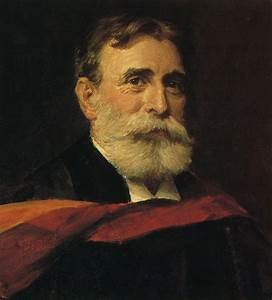
B. B. Warfield preached a wonderful sermon in Miller Chapel at Princeton Theological Seminary on the role of the Holy Spirit aiding God’s people in prayer. There is no date given, but text was Romans 8:26-27, “Likewise the Spirit helps us in our weakness. For we do not know what to pray for as we ought, but the Spirit himself intercedes for us with groanings too deep for words. And he who searches hearts knows what is the mind of the Spirit, because the Spirit intercedes for the saints according to the will of God.”
Warfield begins by setting the context for Paul’s words about the Spirit’s aid to Christian pilgrims
The eighth chapter of Romans is an outburst of humble triumph on the Apostle's part, on realizing that the conflict of the Christian life as depicted in the seventh chapter issues in victory, through the indwelling of the Holy Ghost. Evil may be entrenched in our members; but the power of God unto salvation has entered our hearts by the Holy Ghost and by the prevalent working of that Holy Spirit in us we are enabled to cry Abba, Father; and being made sons of God are constituted His heirs and co-heirs with Jesus Christ. Not as if, indeed, we are to be borne with but effort of our own into this glorious inheritance— "to be carried to the skies on flowery beds of ease." No! "Surely we must fight, if we would win." For, after all, the Christian life is a pilgrimage to be endured, a journey to be accomplished, a fight to be won. Least of all men was the Apostle Paul, whose life was in labours more abundant and in trials above measure, liable to forget this. It is out of the experiences of his own life as well as out of the nature of the thing that he adds, therefore, to his cry of triumph a warning of the nature of the life which, nevertheless, we must still live in the flesh. If "the Spirit Himself beareth witness with our Spirits that we are the Sons of God," and the glorious sequence follows, "and if children, then heirs, heirs of God and joint heirs with Christ," no less do we need to be reminded further of the condition underlying the victory—"if so be that we suffer with Him that we may also be glorified with Him." To share with Christ His glory implies sharing with Him His sufferings. "Must Jesus tread the path alone and all the world go free?" Union with Him implies taking part in all His life experiences, and we can ascend the throne with Him only by treading with Him the pathway by which He ascended the throne. It was from the cross that He rose to heaven.
Warfield describes the Christian life as a call to suffer and to take up Christ’s cross, making an appeal to the famed Pilgrim’s Progress
The rest of this marvellous chapter seems to be devoted to encouraging the saint in his struggles as he treads the thorny path with Christ. The first encouragement is drawn from the relative greatness of the sufferings here and the glory yonder; the second, from the assistance in the journey received from the Holy Ghost; and the third from the gracious oversight of God over the whole progress of the journey. This whole section of the chapter, therefore, appears as Paul's word of encouragement to the believer as he struggles on in his pilgrimage—in his "Pilgrim's Progress"— in view of the hardships and sufferings and trials attendant in this sinful world on the life in Christ. It is substantially, therefore, an Apostolic commentary on our Lord's words, "If any man would come after me, let him deny himself and take up his cross and follow me;" "he that doth not take up his cross and follow after me, is not worthy of me." These sufferings, says Paul, are inevitable; no cross, no crown. But he would strengthen us in enduring the cross by keeping our eye on the crown, by assuring us of the presence of the Holy Spirit as our ever-present helper, and by reminding us of the Divine direction of it all. Thus he would alleviate the trials of the journey.
He concludes . . .
Thus, then, the Spirit helps our weakness. By His hidden, inner influences He quickens us to the perception of our real need; He frames in us an infinite desire for this needed thing; He leads us to bring this desire in all its unutterable strength before God; who, seeing it within our hearts, cannot but grant it, as accordant with His will. Is not this a very present help in time of trouble? As prevalent a help as if we were miraculously rescued from any danger? And yet a help wrought through the means of God's own appointment, that is, our attitude of constant dependence on Him and our prayer to Him for His aid? And could Paul here have devised a better encouragement to the saints to go on in their holy course and fight the battle bravely to the end?