“The Law of Liberty” The Third in a Series on the Book of James (James 1:19-27)
Setting the Scene
In the most direct and pointed of terms, the Book of James exhorts Christians to do good works. According to James–the brother of Jesus–God is the giver of every good and perfect gift. One of these good and perfect gifts is the fact that God has brought his people forth from death to life through the means of his Word (the preaching of the gospel). But James goes on to point out that since believers have been brought to life through the preached Word, believers are therefore to obey that same Word which has given them life. James directs us not only to hear the Word, but do the Word. This simply means that we are to obey the commandments given by God to his people. We are to do this not to become Christians, but because we already are Christians. We will obey the commandments of God as revealed in the perfect law of liberty, because God has given us a living faith, which not only hears, but does.
Doers of the Word
As we continue our exposition of the Book of James, we now move into the last half of the first chapter (verses 19-27). In these verses, James makes the point that those who have been brought forth by God, need to obey the Word which has given them life. To put it yet another way, true, genuine, saving faith, necessarily leads to the production of good works. The relationship between the new birth and good works–an important theme in the Book of James—is an essential aspect of Christian doctrine. But this is also a topic about which many Christians are woefully confused. So we’ll begin by taking up the subject of the relationship between regeneration and good works in order to prepare us to make our way through verses 19-27 of the first chapter, where persecuted Jewish Christians are exhorted by James to be doers of the Word and not mere hearers only.
I have been making the case that the proper way to interpret the Book of James is to place this book in its historical context. With this book, context is everything. I contend that James was quite likely the first book written in our New Testament, and that this epistle was written at some point in the mid 40's of the first century. As we saw in the previous exposition, the original audience was persecuted Jewish Christians who were scattered throughout Palestine. Written before the controversy over justification broke out between Jewish and Gentile Christians in Asia Minor in 48 CE, James is writing to exhort Jewish believers to live in a manner which is consistent with their profession of faith.
Given the historical circumstances, this kind of direct exhortation should not come as a surprise to us, nor does this mean that James is somehow in conflict with Paul when it comes to the doctrine of justification. This simply means that those who profess faith in Christ are not to wilt in the face of difficult times and persecution. James tells his readers in the opening verses of the first chapter that their current trials serve as a test of faith, and that God will graciously give them the wisdom needed to gain the proper perspective on these trials when enduring them. James has made it plain that God allows various trials to come our way–the purpose of which is to strengthen our faith and to bring God’s work in us to fruition. But no one can say that God is tempting them when they sin. This is because in God there is no shadow of turning, there are no sinful desires, and there is no change. Rather, God alone is the source of every good and perfect gift.
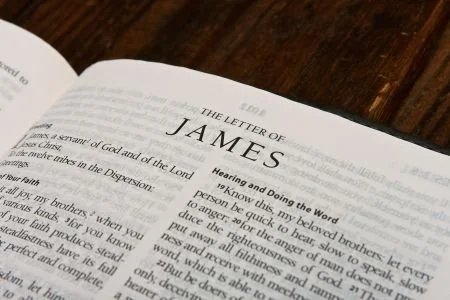
In the second half of the first chapter (verses 19-27), James exhorts his readers to put that same Word which gave them life into practice. Says James, a Christian must not only hear the Word, a Christian must be a doer of the Word (James 1:22). As James begins to make this point more directly and become more and more specific, we see a subtle shift as we move into the second half of chapter one and into chapter two. James now speaks directly to the matter of how a living faith produces good works. In the latter part of the first chapter of James, James speaks in general terms of the “Word.” But as James starts to press home his point that the Word which makes us alive, produces a living faith which, in turn, produces good works, James begins to speak more narrowly of “the perfect law” (i.e. the Ten Commandments). Throughout these verses, James speaks of good works as something which a Christian must do. These works demonstrate that a genuine faith in Christ is present, because those once dead in sin whom God has “brought forth” to life and faith in Jesus Christ will do good works. A good work is simply that which is done out of faith, and in obedience to the commandments found in the perfect law of liberty (cf. Heidelberg Catechism, Q & A 91).
The Cause (Regeneration and Faith), The Means (Preaching), and the Effect (Good Works)
Before we take up the details of verses 19-27, we need to tackle the question of good works and their role in salvation. We need to be very clear about the cause of salvation, the means through which we are saved, and the effects of that salvation. James told us in 1:18, that God has acted sovereignly to bring to life those to whom James is writing. James is not writing to evangelize non-Christians, or explain how they are justified. Rather, he is writing to persecuted Jewish believers then undergoing difficult trials. James is telling these believers (who have been made alive, who have come to faith, and who are already justified) what they are supposed to do when they come under persecution and face difficult circumstances. They are to ask God for wisdom, and they are to put that wisdom into practice thereby obeying the commandments of God as revealed in the law.
To put this in theological terms, James is defending the doctrine of sola gratia–God sovereignly and graciously regenerates his people through the preaching of the Word. God does not merely make salvation available to all who want it, because people who are dead in sin do not want to be saved. But James does not leave the matter there. Those whom God regenerates (because he is gracious and sovereign) will indeed manifest that regeneration by not only hearing the Word (when it is preached) and believing the promises found therein and are justified, but also in desiring to obey the things commanded in the Word. The cause is God’s grace, the means is the preached Word, and the effect is regeneration, faith, and good works. None of this is in conflict with anything found in the writings of Paul.
Make no mistake about it, in the most straight-forward of terms James exhorts his readers to do good works. In fact, there will be no one in heaven who does not do good works. But this in no way implies that these good works accrue merit and gain for us a right-standing before God. Nor does this remotely imply that the command to do these good works carries with it the ability to actually do them. If James is clear about anything, it is that God brings all of this about through the Word (specifically, the preaching of the gospel).
And having brought us forth from death unto life, James can speak of what that new life should look like. That new life will reflect–as James puts it in verse 21–the Word which God has implanted in us, which is able to save our souls. James is anticipating Paul’s words in Ephesians 2:8-10: “For by grace you have been saved through faith. And this is not your own doing; it is the gift of God, not a result of works, so that no one may boast. For we are his workmanship, created in Christ Jesus for good works, which God prepared beforehand, that we should walk in them.”
Those who have been brought forth by the Word of God, and in whom the Word of God is implanted, will do good works. James never says nor implies that we must do good works in order to be justified. But he is saying that those who are regenerated (“brought forth”) and then justified need to obey what they hear. James takes direct aim at those who make a profession of faith in Christ but then pay lip-service to the commandments because they are seeking to avoid persecution.
Gospel in, Works Flow Out
With the matter of cause, means, and effect behind us, we now turn to James’s discussion of anger and hasty speech in verses 19-20, before James speaks of obedience to the Word in verse 21. Having made plain that God is the author of every good gift and is not in any sense the author of sin and/or temptation, James begins the transition to a discussion of good works and the law of God by declaring, “know this, my beloved brothers: let every person be quick to hear, slow to speak, slow to anger; for the anger of man does not produce the righteousness of God.”
Many commentators have noted that James’s concern about proper speech reflects a very prominent theme in Jewish wisdom literature, the importance of holding one’s tongue as a demonstration of a person’s wisdom. In Proverbs 17:27-28 we read the following: “whoever restrains his words has knowledge, and he who has a cool spirit is a man of understanding. Even a fool who keeps silent is considered wise; when he closes his lips, he is deemed intelligent.” According to Proverbs, a person demonstrates wisdom by guarding their words. But a person who is slow to hear, quick to speak, and is easily angered, demonstrates a lack of wisdom. And their behavior, says James, is inconsistent with the righteousness of God.
The phrase “the righteousness of God” is very controversial, especially given the rise of the so-called New Perspective on Paul (NPP). As used in the Old Testament, the phrase often refers to an attribute of God–“he is righteous.” In other words, God is everything that Scripture says about him. But the term can also refer to an act of God in which he puts his sinful people in right relationship to himself–this is where the righteousness of God is related to the doctrine of justification. This latter is the primary meaning of the “righteousness of God” as found in the New Testament, especially in the letters of Paul.[1] God imputes (grants, credits, reckons) the righteousness of Christ to us through the means of faith so that we who are sinners can be reckoned righteous, and therefore be justified based upon of the merits of Christ.
But, it is clear, I think, that James is using the phrase in a different sense than Paul–in fact, James is writing before Paul had written anything and well before any controversy about justification had arisen. The key to James’s usage of the phrase is found in the verb, which means “to do,” or to “produce” righteousness. Therefore, James cannot be speaking here of the gift of God’s righteousness to sinners when they come to faith in Christ. James’s point seems to be that when someone is angry, their conduct is such that it does not, and (indeed) cannot be pleasing to God. James clearly echoes the words of Jesus, who calls his followers to exhibit a righteousness which exceeds that of the Pharisees, Scribes, and teachers of the law (cf. Matt. 5:20; 6:33). Anger does not produce that kind of righteousness which reflects the goodness and character of God. In fact, anger is contrary to the righteousness of God.
James is setting out the theological justification for his discussion in chapter 3 about the power of the tongue to destroy others through angry speech. Here, James is simply saying that angry speech is sinful, it reflects a lack of wisdom, and it does not produce that kind of righteousness in us, which is a true manifestation of the power of God’s word.[2] Calvin ties this righteousness to our angry speech as well as to our sinful propensity not to listen to God when he speaks. Says Calvin, “our violent behavior, our arrogance, or apathy greatly obstruct God from finishing his work in us. . . . Hush, the apostle says to us, no one will ever be a good student of God, if he will not listen to him.”[3]
Wisdom from God manifests itself in conduct which is quick to listen, slow to speak, and which refuses to give way to anger. This is the righteous conduct which God produces in us through the Word, and conduct which reflects his very character. To react quickly, and in anger, is to act in a way which is inconsistent with the character of God as revealed in his perfect law.
Clean Clothes
As we now turn to the balance of the chapter, verses 21-27, James’s point becomes a bit more refined. Those who have been regenerated by the Word, must accept what that Word teaches, and then must put that Word into practice. Close upon the heals of his exhortation about listening, speaking, and anger, comes the following exhortation. “Therefore put away all filthiness and rampant wickedness and receive with meekness the implanted Word, which is able to save your souls.” James is exhorting us to take off the remnants of what we were before we became Christians, just as someone takes off dirty clothing.
A Christian must be willing to remove (just as we would take off dirty clothes) those things which are filthy (James is speaking of moral filth). Furthermore, the kind of evil about which James is speaking is such that just as soon as we deal with one sin, another sin is right there to take its place. There is no hint of perfectionism here–i.e., that at some point we’ve dealt with our sin, so that the struggle with sin goes away.
No, James speaks of “rampant” wickedness to make the point that sin is persistent, that it comes in many different forms, and that our combat with sin won’t stop, anymore than we can wear clothes which don’t get dirty and which don’t need to be laundered. While Paul speaks in Galatians 3:27 and Romans 13:14 of putting on Christ, as one puts on a garment, here James speaks of the flip-side of the process–the need to strip off the dirty clothing of human sinfulness.
The tricky part of this verse is the phrase, “the implanted Word.” Most likely James is not referring to any kind of innate or natural knowledge of God, but that Word which was preached to us. The stress here falls upon allowing the Word we’ve heard, and which we’ve received–the same Word which has given us life–to continually influence, and permeate all of our thinking and doing.
When James commands us to receive the Word of life meekly, he’s reminding that we are all beggars and we must learn to take what God gives with grateful hearts and open hands. Because this happens in the lives of all those whom God brings forth through the Word, James directs us ahead to that day when God’s work in us is finally made perfect and complete. This is what James is getting at when he speaks of the Word which is able to “save our souls” as something which occurs in the future. God has begun his work in us when we were made alive. He will complete that work in us on the day when we are raised from the dead and glorified. Because they have been made alive, God’s people are to be about the task of stripping off their sins (as they take off dirty clothes) and receiving (meekly) all the good things which God has to give us.
Be Doers, Not Merely Hearers
If there is any such thing as a thesis statement in the Book of James, it is verse 22. “But be doers of the Word, and not hearers only, deceiving yourselves.” This is James’s way of fleshing out in a very practical sense what it means to receive the Word with “meekness” (v. 21). The order of things here is very important to keep in mind. In James’s argument, “hearing” the Word actually precedes “doing” the Word. The problem which James is addressing is that there are some persecuted Christians in his audience who “hear” the Word (and by implication, outwardly profess faith in Christ), but who do not “do the Word,” which is a reference to the fact that these people are characterized by not listening, speaking too quickly about things they know not, as well as reacting in anger. These are people who are responding to their difficult circumstances in ways which are completely inconsistent with the righteousness of God.
People who fall into this category (hearers, but not doers) are self-deceived. Such people may think they are secure before God because they walked an aisle, prayed a prayer, sent a check to a worthy cause, or performed some religious ceremony. But if the Word was truly implanted in them, and they truly received it with meekness, then the Word will set off an intense struggle with sin, like that which James has just described in terms of the need to continually put away all filthiness and rampant wickedness. Those who do not “do” the Word, don’t struggle with sin. They are comfortable wearing their filthy clothes. They are comfortable acting without listening, speaking without thinking, and acting out of anger. They may profess faith in Christ, but they show no sign whatsoever of actually following him! This is especially true in those professing Christians in James’s audience who would rather be contaminated by the world and avoid persecution then obey the commandments of God and suffer the consequences–the wrath and ire of their persecutors.
Using James’s categories, those who “hear” but do not “do” the Word are the people who show no demonstrable change in their behavior even though they’ve supposedly “heard” the Word. But those who truly hear the Word, listen to what it says and then put the Word into practice. These are the people who demonstrate that they are putting the wisdom given them by God into action and that as a result, their conduct reflects the righteousness of God. Once again, James is echoing the words of Jesus found in Luke 11:28. “Blessed rather are those who hear the word of God and keep it!” This refers to both hearing (in the sense of believing its promises) and then putting its precepts into practice.
The Mirror Test
As he often does in this epistle, James uses a vivid illustration to press home his point. The person who merely hears–but who doesn’t listen with faith, and who does not do what the Word commands–behaves as follows.
For if anyone is a hearer of the Word and not a doer, he is like a man who looks intently at his natural face in a mirror. For he looks at himself and goes away and at once forgets what he was like. But the one who looks into the perfect law, the law of liberty, and perseveres, being no hearer who forgets but a doer who acts, he will be blessed in his doing.
The contrast which James sets out here is an important one and we need to carefully unpack this.
The hearer of the Word only, looks at the reflection of himself in a mirror. He gazes intently upon his reflection, but when he walks away almost immediately he forgets what he looks like. But the doer of the Word, on the other hand, looks not at himself. He gazes upon the perfect law, which James calls the “law of liberty.” The contrast between the hearer of the Word and the doer of the Word is that the person who intently gazes upon the law is the person who perseveres under trial. Unlike the person who gazes at his own image and immediately forgets what he looks like, the person who is a doer of the Word gazes upon the law of freedom and receives the appropriate blessing. The contrast between “hearers” and “doers” could not be greater. One is self-absorbed. The other is blessed by God.
Notice the shift from the mention of “the Word” (in a general sense), to the mention of the law (much more specific). When James speaks of the law, he is referring to the law of Moses, but only as that law is interpreted through the lens of Christ. Jews often spoke of the law as “perfect”, reflecting the words of Psalm 19:7. “The law of the Lord is perfect, reviving the soul; the testimony of the Lord is sure, making wise the simple.” But as we will see in the next chapter, James speaks of that law as being fulfilled. This is, of course, something which Jesus did and through his own obedience to the law of Moses, and which believers who trust in Jesus must likewise do, not to be justified, but because they are justified.
Having come to believe that Jesus is the Son of God, James’s reference to the law of Moses must be understood in light of Christ’s fulfillment of that law. As we will see later in the epistle, James never refers to the ceremonial aspects of the law, James only refers to what we call the “moral law,” the “Ten Words” (Ten Commandments) which God gave to Israel in the form of the two tables of the law, and which can be summed up in the command to love God and neighbor–these being central themes in the teaching of Jesus.[4]
The Law of Liberty
Although James does not refer to this directly, this “doing” of the law is the fulfillment of prophecies such as Jeremiah 31:31-34 and Ezekiel 36:24-32, in which the prophets foretell of a coming age in which God will call his dispersed people unto himself from the nations (the messianic age), when he will remove their hearts of stone (“calling them forth”), place his Spirit within them (something Paul mentions specifically–e.g., Ephesians 1:13-14), as well as delivering them from their uncleanness, and then creating within them the desire to obey the law. All of these things are implied by James’s comment that the law is not a code of bondage, but a law which sets people free, a law of liberty.
But how can James call the law a “law of liberty” when that law contains a series of commandments which we are obligated to obey? How can the demand to obey be a call to freedom? The key here is that the law has been fulfilled by Jesus. Jesus obeyed every one of these commands perfectly. Jesus’s death upon the cross pays for our every infraction of the law. And since Jesus has fulfilled the law, and died for all of those times we have broken the law, the law no longer condemns us. In fact, in Christ, we are actually free to obey the law because we are already counted as righteous law-keepers.
Therefore, the law reveals to us what God requires of us once we are in Christ. The mere hearer of the law knows what the commandments require, but never does them. The doer of the law realizes that they are not obeying the commandments to earn something from God, but they “do” the commandments because Christ has fulfilled them. In doing this, James says, they will be blessed. This is why some of our theologians refer to the law as a teacher of sin and as the rule of gratitude. That is exactly what we see here. For those brought forth by the Word, who accept that Word, the law reveals to us what we are to do, now that we are Christians. The law tells us what to do so that we manifest the righteousness of God. But we can only do this because the Word has brought us forth, and because the Word is implanted with us, and when we receive that Word with meekness.
Have spoken of this in rather general terms–(in verses 21 James says we must accept the Word, and then in verse 22 he says we must “do” the Word)–in verses 26-27, James speaks of obeying the law by introducing three major themes he will take up later in the epistle. “If anyone thinks he is religious and does not bridle his tongue but deceives his heart, this person's religion is worthless. Religion that is pure and undefiled before God, the Father, is this: to visit orphans and widows in their affliction, and to keep oneself unstained from the world.” In chapters three and four, James will deal with controlling the tongue. In chapters two and five, James will exhort his readers to care for the helpless. And then in chapter four, James will speak of the need to avoid “worldliness.”
True Religion
The point he is making here is simply that true religion manifests itself not in words, but in concrete action, the nature of which James will spell out in the rest of this epistle. Those who hear and do the Word tame their tongues, they remember the poor and the afflicted, and they make every effort to avoid being contaminated by the world (which is a reference to the non-Christian way of thinking and doing).
At the end of the day, the situation which James is addressing is simply this. There will be people in our midst who hear the Word and then make a profession of faith, but there is no demonstrable evidence that these people are truly Christians. These folk are James’s mere hearers of the Word. When persecution or trials come, mere hearers become just like those persecuting them so as to avoid the persecution. They don’t listen, they act rashly, they act in anger, they don’t tame their tongues, they don’t help the helpless, they don’t avoid thinking and acting like a pagan. They are not even interested in doing these things. For mere hearers, the perfect law is nothing but a burden to them. James says they prefer to gaze at their own image, rather than delight in the law which reveals the righteousness of God.
James is exhorting his reader not to be like that. What is in our head (what we hear), must make its way into our hearts, and then to our lives (doing). Because God has brought us from death to life and implanted his Word within us, we must do the Word, not to earn something from God, but because Christ has died for our sins and fulfilled all righteousness for us and in our place. Because of Jesus Christ’s death and perfect obedience, obeying the law is no longer a burden, it is an exercise of that freedom won for us by Jesus.
As James exhorts us, in light of all of this, let us be doers of the Word, and not mere hearers only!
________________________________
[1] Moo, The Letter of James, 83.
[2] Moo, The Letter of James, 83-84.
[3] Calvin, The Epistle of James, Calvin’s Commentaries, Vol. 3 (Eerdmans,1980), 271.
[4] Moo, The Letter of James, 94.