
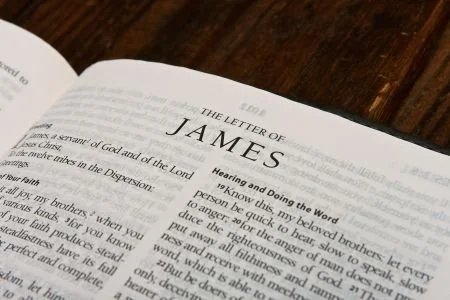
Context, Context, and Context
When people cite verses from the Book of James, often times they cite them from our text–the middle portion of James chapter 4. Not only do we often hear the words of James 4:8, “draw near to God and he will draw near to you,” used as an evangelistic appeal (incorrectly, I might add), but many Christians are familiar with the verses “God opposes the proud, but gives grace to the humble” (James 4:6) and “resist the devil and he will flee from you” (James 4:7). It is remarkable how often these verses are lifted from their context and used in ways in which James likely did not intend. Therefore, it is important to treat these verses in the overall context of James’ epistle, so as to understand them correctly, because these verses not only warn us of the danger of allying ourselves with the world, and judging others, but these same verses also direct us to seek the grace of God, which he has freely promised to give us in the person of his son.
We now come to James chapter 4. Since we have much ground to cover–even though there are only nine verses in our passage–I want to briefly put this section of James into context before we get started. With the Book of James context is everything. It is very important that we understand the background to this letter as we work through it. We also need to keep in mind the purpose for which this letter was written, as well as the date and background of the author, who in this case, is the brother of our Lord Jesus Christ, and who is writing to persecuted Jewish Christians scattered throughout Palestine and Syria.
Based upon the various exhortations we find in the Book of James, we can see some of the issues which were troubling the congregations to which he is writing. James recounts how professing Christians were discriminating against the poor and showing favoritism to the rich. James tells us why it is so important for us to tame our tongues (because our words can be so destructive), as well as explaining why we must seek wisdom from above (so that we do not rely upon the wisdom of this age). James has warned us of the dangers of worldliness, which is thinking and acting like those non-Christians who were persecuting the churches. In chapter 4, James addresses the question of Christian behavior in terms of considering our fundamental alliance with God and his saving purposes in Jesus Christ. If we are allied with God through faith in Christ, we cannot behave as though we were allied with those who hate the gospel.
The Fruit of Justifying Faith
As James has already established in chapters 1 and 2, good works are the fruit of justifying faith. While God has brought us forth from death to life through the preaching of the gospel (James 1:18), and then implanted that word within us (1:21), James has also pointed out how evil passions remain within every Christian even after they come to faith in Christ (4:1). Christians must continue to struggle against these passions and strive to obey the commandments of God (4:1 ff). While the law of God exposes our sins and demonstrates that we are law-breakers (2:10), once we trust in Jesus Christ (who has died for all our sins and whose own perfect law-keeping is credited to us through faith), the commandments of God reveal to us those things we must do, now that we are Christians (2:12). This is what James means when he exhorts us to be doers of the word, and not mere “hearers” only (1:22). Christians must strive to obey the commandments of God, and in doing so, we “do” those good works which are the proof that we have placed our trust in Christ. This is what James is getting at when he says that we are not justified by faith alone, but that our faith in Christ is completed by our good works.
To read the rest, follow the link below
Read More