
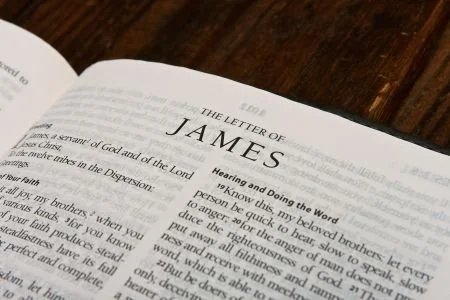
Introduction
When I first announced that I was going to post an exposition of the Book of James, there were two common responses. The first was “good, about time you got around to something practical.” The second (and more common) response was “ugh . . . there’s no gospel in that epistle of straw.” My hope and prayer is that both sets of complainants will find something of value in this series on the Book of James.
The Book of James is about as straight-forward a book as you will find in the New Testament. There is a higher percentage of imperatives (commands) in the Book of James than in any other book of the Bible. James did not write this epistle to instruct his reader, as much as to exhort persecuted Christians to put their faith into practice. If you want “practical,” this is a book for you.[1] But James is also chock full of theological insight and interpreting this book correctly–which entails understanding the context in which this epistle was written–will eliminate many of the fears and misunderstandings people commonly have about the Book of James, i.e., that it contains no gospel, or that James’s doctrine of justification is in conflict with Paul’s.
Luther and Calvin’s Initial Reservations
That said, the Book of James can be quite difficult in places because this letter is not structured like most of the other epistles in the New Testament (i.e., the epistles of Paul). Many of you know of Martin Luther’s reservations about the Book of James–Luther called it an “epistle of straw,” although Luther cited from James many times, and often encouraged Christians to read it and study it. Calvin’s assessment was much more nuanced. Calvin stated that James “seems rather reluctant to preach the grace of Christ than an apostle should be” but Calvin goes on to say, “we must remember not to expect everyone to go over the same ground.” In fact, says Calvin, James “is a rich source of varied instruction, of abundant benefit in all aspects of the Christian life.”[2] I think Calvin got this absolutely right.
A General Letter – To the Churches
Unlike the letters of Paul, the Book of James is a more “general” letter written to the church at large, not to a specific congregation facing a unique set of circumstances. This is why James is known as a “catholic” or “general” epistle, and is placed in the canon with the other so-called “catholic” or general epistles: 1 & 2 Peter; 1, 2, 3 John; and Jude. While James draws much of his material directly from the teaching of Jesus–which is not surprising since James is the brother of our Lord–this epistle is written to Jewish Christians, who, at the time of the epistle’s composition, were scattered throughout Palestine and Syria. These early Christians were, apparently, facing a great deal of persecution and hardship because of their allegiance to Jesus Christ. Since James’s readers were likely facing very difficult times they surely were tempted to take the easy way out and make “friends with the world” as James puts it (4:4) so as to avoid persecution.
To read the rest, follow the link below
Read More