
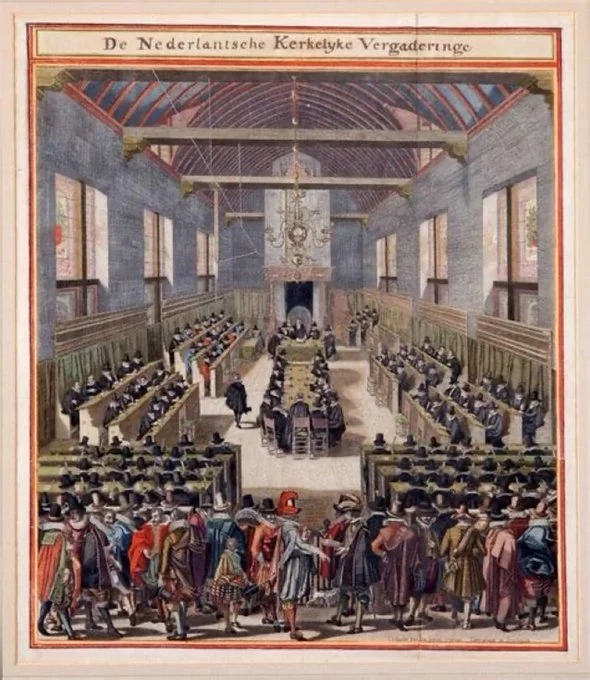
Article 13: Assurance No Inducement to Carelessness
Neither does the renewed confidence of perseverance produce immorality or lack of concern for godliness in those put back on their feet after a fall, but it produces a much greater concern to observe carefully the ways of the Lord which he prepared in advance. They observe these ways in order that by walking in them they may maintain the assurance of their perseverance, lest, by their abuse of his fatherly goodness, the face of the gracious God (for the godly, looking upon his face is sweeter than life, but its withdrawal is more bitter than death) turn away from them again, with the result that they fall into greater anguish of spirit.
____________________________________________
Given the number of articles under the Fifth Point of Doctrine addressing the matter of assurance of one’s salvation actually leading to godliness rather than carelessness or indifference to godly living, it is clear that this was a charge frequently raised by the Dutch Arminians (as well as Rome).
The reality is that Christians can and do fall into serious sin—a point acknowledged in previous articles. But in the case of God’s elect, if and when they fall into serious sin, they are eventually restored to God’s favor, even if the consequences of their sin remain a factor in their lives. Since this is the case, those who are restored find themselves taking greater care not to allow such a thing to happen again, as well as possessing a deeper understanding of the grace and mercy of God toward his wayward sheep.
There are a number of biblical cases in which this is evident. In Psalm 51, for example, David cries out for forgiveness, desiring to have his transgressions blotted out (v. 1) and to be washed and cleansed of his sins (v. 2). His sin was exposed by Nathan the prophet after David arranged for the death of Bathsheba’s husband. His sin is before him (v. 3), he acknowledges that he has done evil in God’s sight (v. 4), and he asks for a clean heart (v. 10), praying not to be cast away, nor have the Holy Spirit taken away. Throughout the Psalm, David prays for full restoration before God, the joy of his salvation restored, an increase of wisdom, and to be an example to others. Article Thirteen is, in effect, a summary of Psalm 51—the perfect illustration of what the Canons describe as “a much greater concern to observe carefully the ways of the Lord which he prepared in advance,” and to come to know again “his fatherly goodness, the face of the gracious God (for the godly, looking upon his face is sweeter than life, but its withdrawal is more bitter than death) turn away from them again, with the result that they fall into greater anguish of spirit.”
To read the rest, follow the link below
Read More