
The Uniqueness of Christianity — God Incarnate
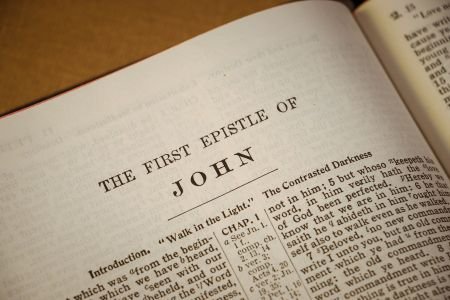
I know of no religious truth claim quite like the one found in the opening verses of John’s first epistle. According to the author (John)–who claims to be an eyewitness to the earthly ministry of Jesus Christ–God himself was manifest in human flesh in the person of Jesus of Nazareth. The author knows this to be true because with his own ears he has heard God in the flesh teach and preach. With his own eyes, John has seen God in the flesh perform miracles, demonstrate his glory, and present himself alive after his resurrection from the dead. With his own hands, John has reached out and touched the very son of God. Even as John opens this epistle, he proclaims to us that we too may have fellowship with that same incarnate word whom John describes throughout this epistle as God manifest in the flesh. Therefore, Christianity is a religion of flesh and blood, anchored in the public record of history, and not in the secret recesses of the sinful human heart.
The Background to John’s Three Short Epistles
We begin a new series—an exposition of the epistles of John. These epistles include the letters known to us as 1st , 2nd , and 3rd John. In order to interpret these epistles correctly, it is vital that we know something about the historical background and circumstances which led to their composition. Therefore, I’d like to spend some time going through this material before we turn our attention to the first four verses of John’s first epistle, in which John announces his intention to proclaim to us that Jesus is the word of life, God manifest in the flesh.
The historical circumstances which led to the writing of John’s epistles is vastly different from that of the Book of James, which we covered previously. James was written about ten years after Christ’s death, resurrection, and ascension to a group of persecuted Jewish Christians living throughout Palestine and Syria. John, on the other hand, is writing to a group of house churches in and around Ephesus (made up of Jews and Gentiles). Not only does John compose these epistles as much as a generation later than James, the churches to which he was writing were facing a number of false teachers who were denying that Jesus was God in the flesh. Sadly, many of those teaching such a thing were men who had departed from the faith they previously professed. John must deal with an entirely different set of circumstances than James. If James was the earliest letter in the New Testament, the epistles of John are surely among the last documents to be included in the canon of the New Testament.
The case is overwhelming that these three letters were written by the apostle John. Based upon the grammar and style of these three letters, there can be no doubt that they were written by the same person who composed the Gospel of John.[1] In fact, virtually every line in this epistle demonstrates some sort of similarity to, or dependance upon, the Gospel of John.[2] Although critical scholars go to unbelievable lengths to argue that these letters were not actually written by John (the apostle and associate of Jesus), they are not driven to this conclusion because of any evidence, but because of their rather ingenious but purely speculative theories about gospel origins.[3] The traditional view that the gospel and the three letters of John all came from the apostle John, still has far and away the most evidence in its favor.[4]
To read the rest, follow the link below
Read More