Some Important New Books on the Horizon
First up, because it is an important book and already in print, is the Festschrift for Scott Clark on the occasion of his retirement from Westminster Seminary California
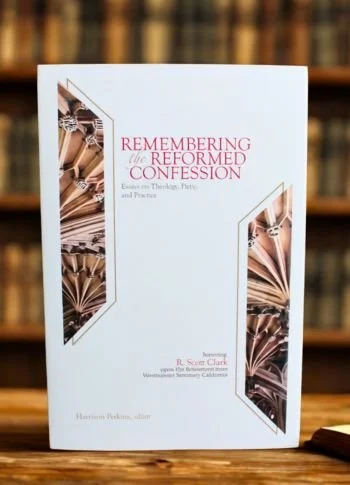
About the Book:
Remembering the Reformed Confession: Essays on Theology, Piety, and Practice Honoring R. Scott Clark upon His Retirement from Westminster Seminary California gathers former students, colleagues, and friends to write in tribute to Scott’s legacy. Addressing ecclesiastical matters, theology, church history, and contemporary issues featured in Scott’s teaching and writing ministry, the authors aim to show what they have learned from Scott in the hope that many others will continue to benefit from what Scott has said and written over the decades. His work continues through the Heidelberg Reformation Association, which you may support by purchasing and sharing this work.
You Can Order it here: Remembering the Reformed Confession
Contents:
“Remembering the Reformed Confession in R. Scott Clark’s Life and Ministry”—Harrison Perkins
“Ecclesiology: The Parity (and Sometimes Parody) of Ministers”—Dan Borvan
“Confessions and Reform: An Essay”—W. Robert Godfrey
“Reforming the Church”—Chad Vegas
“Pastoring God’s People”—Christopher J. Gordon
“The Regulative Principle of Worship”—Scott C. McDermand II
“The Pactum Salutis in Hebrews 7:20–22”—S. M. Baugh
“Covenant and Christ’s Community”—Harrison Perkins
“God’s Two Powerful Words”—Michael Horton
“Sanctification: The Monergistic Work of God’s Free Grace”—Tony Phelps
“If You Recover Reformed Confessionalism, Will Anyone in the Churches Hear It?”—D. G. Hart
“Learning to Love Protestant Scholasticism”—Patrick J. O’Banion
“Ecumenism, Culture, and Kingdoms”—Brad Isbell
“Friendly Fire: Baptists and Reformed”—Patrick Abendroth and Mike Abendroth
“Theological Education”—Zachary Purvis
Anything Richard Muller writes is important. This book on Calvin is due in March of 2027
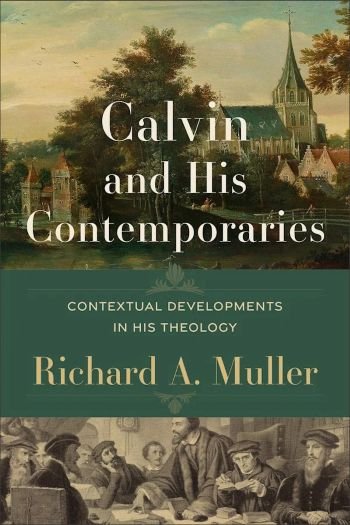
Here’s the publisher’s blurb:
Reformed Christians look to John Calvin's 1559 edition of Institutes of the Christian Religion as their doctrinal foundation. Yet an exclusive focus on the finished form of this seminal work may cause us to overlook the growth and evolution of the author and how those in Calvin's orbit helped shape his thought.
In Calvin and His Contemporaries, the culmination of four decades of research, renowned Reformation scholar Richard Muller traces the intricate connections between Calvin's thought and that of his fellow reformers across Europe, including Pierre Viret, Philip Melanchthon, and Theodore Beza. By analyzing Calvin's letters and early drafts of the Institutes, Muller illustrates how Calvin's theology developed dynamically over time, with special attention paid to Calvin's Christology and doctrine of the Lord's Supper.
Muller's study reveals that Calvin was an exegete and theologian thoughtfully responding to the issues of his time, making Calvin and His Contemporaries essential reading for students of the Reformation, Calvin specialists, and Reformed Christians seeking to expand their knowledge of their history.
You can preorder from Baker Academic at a discounted price
Ever wonder why and how confessional Reformed and Presbyterian churches worship the way they do?
The Publisher’s Blurb:
Discover the depth, beauty, and enduring power of historic Reformed worship.
In The Worship of the Reformed Church, esteemed pastor and scholar Terry L. Johnson presents a comprehensive, compelling case for recovering the biblical, theological, and historical foundations of Reformed worship in our contemporary age. With clarity and conviction, Johnson demonstrates how Scripture-saturated, God-centered, gospel-structured worship not only shaped centuries of Christian piety but remains essential for forming faithful, mature disciples today.
Drawing from the Reformers, the church fathers, and modern scholarship, Johnson explores every aspect of corporate worship – reading, preaching, praying, singing, and the administration of the sacraments – showing how each element serves as a vital means of grace. He also offers practical guidance for pastors, elders, and congregations seeking to implement historic Reformed patterns with excellence, reverence, and pastoral wisdom.
This book helps readers understand:
Why historic Reformed worship is rooted in Scripture and the early church
How worship shapes belief, character, and long-term spiritual vitality
The strengths of God-centered, Bible-filled, gospel-structured order of service
Practical steps for restoring classic Reformed elements in modern congregations
The dangers of consumer-driven, entertainment-oriented worship trends
In an era marked by shallow spirituality and shifting tastes, this book calls the church back to its rich heritage – demonstrating that true renewal is found not in novelty, but in the enduring practices that have sustained believers for generations.
It is available and you can order it here: The Worship of the Reformed Church
Zackary Purvis on the Significance of the Printing Press
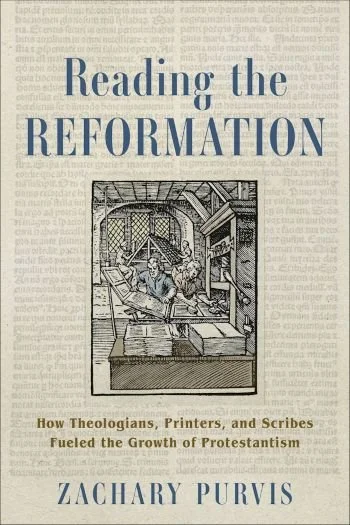
Here’s the publisher’s blurb
During the Reformation, theologians wrote, colleagues annotated, scribes recorded, and printers toiled, bringing Protestant doctrine and practice to life and transforming European society. Demonstrating the benefit of integrating histories of culture and scholarship with historical theology, this book invites readers to view the Reformation and its writings with fresh eyes.
Instead of focusing solely on the printing press as an agent of change, Reading the Reformation recalls the forgotten methods of writing, annotating, publishing, and preserving texts by key Protestant reformers, from Martin Luther to John Calvin, from Martin Bucer to the Westminster Assembly. Zachary Purvis covers a broad range of topics, meticulously illuminating the physical and mental labor behind the texts that fostered the Reformation.
This book is an indispensable resource for students, scholars, history enthusiasts, and anyone interested in the transformative power of the written word during one of the most pivotal eras of European history.
It is due out early in November: You Can order it here
Last, but by no means least, is Michael Horton’s new book, due in April of 2027.
This is the third and final volume of the Divine Self series
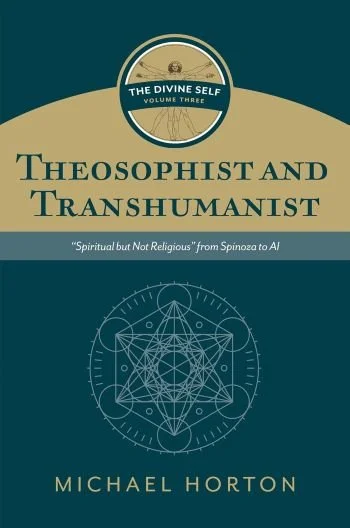
Here’s the publisher’s blurb:
The definitive history of “spiritual but not religious” thought in the modern era
In this third and final volume of The Divine Self series, Michael Horton traces the development of “spiritual but not religious” thought in modernity, starting with the metaphysical insights of the Enlightenment and ending with the transhumanist ideals of Silicon Valley.
As Horton surveys the arc of modern history, he offers fresh perspectives on familiar figures such as Jonathan Edwards, Immanuel Kant, William Blake, Ralph Waldo Emerson, and Friedrich Nietzsche. He also introduces readers to movements and events that are less well known: the surprising rise of Gnostic feminism in the nineteenth century, the exclusive Eranos gatherings in the early twentieth century, and more. Combining extensive research with a comprehensive grasp of history, Horton shows how key intellectual trends―including rationalism’s critique of external religious authority, pietism’s emphasis on inner experience, and Romanticism’s celebration of individual feeling―combined to produce the modern conviction that authentic spirituality is found not in church doctrine but in individual consciousness.
Concluding with a perceptive analysis of worldviews that currently pervade the tech sector, Horton persuasively shows that as institutional Christianity declines in the West, it is being replaced not by science per se but by natural supernaturalism. Ambitious and expansive, this volume―along with volumes 1 and 2 in the series―is an essential resource for anyone who wants to understand the “spiritual but not religious” phenomenon in Western culture.
You can pre-order here: Theosophist and Humanist