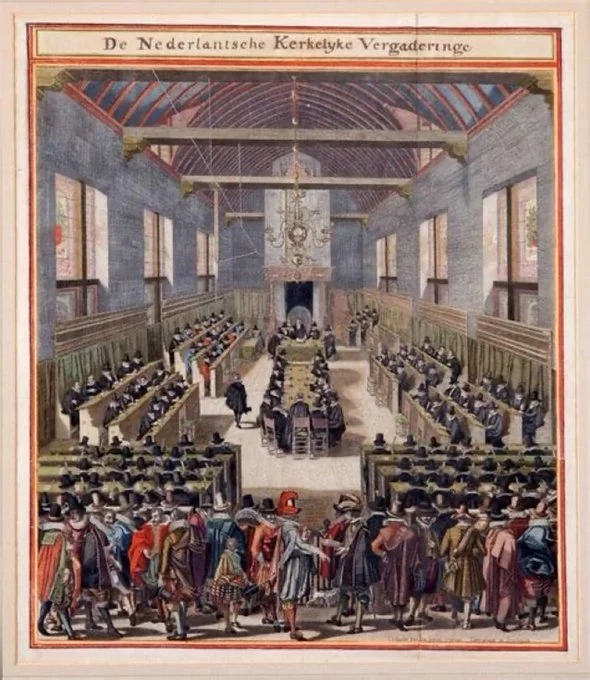
“Perseverance Depends Upon Human Willingness to Do So” — The Rejection of Errors, Fifth Head of Doctrine, Canons of Dort (2)
Having set forth the orthodox teaching, the Synod rejects the errors of those
Who teach that God does provide the believer with sufficient strength to persevere and is ready to preserve this strength in him if he performs his duty, but that even with all those things in place which are necessary to persevere in faith and which God is pleased to use to preserve faith, it still always depends on the choice of man’s will whether or not he perseveres.
For this view is obviously Pelagian; and though it intends to make men free it makes them sacrilegious. It is against the enduring consensus of evangelical teaching which takes from man all cause for boasting and ascribes the praise for this benefit only to God’s grace. It is also against the testimony of the apostle: “It is God who keeps us strong to the end, so that we will be blameless on the day of our Lord Jesus Christ” (1 Cor. 1:8).
___________________________________
The Arminian error addressed here reflects a long-standing but erroneous teaching found in the church to the effect that “if the human will seeks grace, then God responds to human willing by giving more grace to those who take avail of it.” The assumption here is that, even though fallen, the human will retains the ability to respond to a universal, potential form of grace that does not save but makes salvation possible for those willing to seek it. In this case, the Arminian holds that those who persevere are those willing to seek grace and then choose to persevere with God’s help. The Arminians of the time of the Synod spoke of God giving “sufficient power to persevere,” or of God giving “all things necessary to persevere.” This makes salvation conditional and dependent upon human willing, rather than upon the effectual grace and on-going work of Christ as prophet, priest, and king, spoken of throughout the New Testament.
The Arminian error assumes that fallen human nature was merely weakened by the fall, but not enslaved to a sinful human nature. Such a view—which appears from time to time in church history, most notably in the writings of Pelagius—has been condemned as far back as the Council of Orange in 529. In Canon Four of that council, we find the statement, “if anyone maintains that God awaits our will to be cleansed from sin, but does not confess that even our will to be cleansed comes to us through the infusion and working of the Holy Spirit…” before citing Philippians 2:13, “for it is God who works in you, both to will and to work for his good pleasure.”
The Canons correctly point out that the exaltation of human willing over the reality of the consequences of Adam’s fall upon human willing is actually the old Pelagian error come back to life. God’s grace is subject to human willing. “For this view is obviously Pelagian; and though it intends to make men free it makes them sacrilegious.” As the refutation points out, this view has been condemned by those holding to evangelical teaching as contrary to Scripture, citing 1 Corinthians 1:8. It is God “who will sustain you to the end, guiltless in the day of our Lord Jesus Christ.”