More Good Books Coming Later This Year
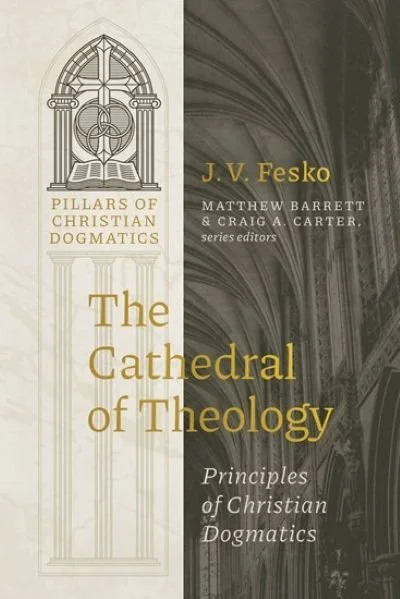
First up is The Cathedral of Theology. J. V. Fesko, Matthew Barret, and Craig Carter are the series editors. I, for one, love to see dogmatics regain some of the ground lost to biblical theology—although both are vital. This is due out from IVP in September of this year.
_____________________________________
Here’s the publisher’s blurb:
Laying the Foundation for a Classical Christian Theology
Good theology requires a firm foundation. But how can we lay a good foundation in our theological work? Moreover, what is theology and how does one do theology?
As the first volume in the Pillars of Christian Dogmatics series, The Cathedral of Theology is a work of prolegomena to establish principles for theology. This book takes an exegetical, historical, philosophical, and doctrinal approach to explore:
what theology is
the necessary virtues for doing theology
the relationship between God’s knowledge and human knowledge
revelation, both natural and supernatural
the relationship between faith and reason
the relationship of metaphysics to theology
principles of biblical interpretation
how to organize theology
the covenantal context for theology
The use of imagination
the boundaries of doctrinal truth and error
the pursuit of beauty
Using the metaphor of a cathedral, Fesko argues for the supreme importance of attending to the basis of the building before advancing the further work of building out walls, windows, and ceilings. With such topics in hand, his book offers the blueprint, prepares the site, and lays the foundation for a beautiful and lasting theological edifice.
The Cathedral of Theology serves as an ideal theology textbook for students and also stands as a rich resource for scholars seeking to deepen their understanding of the foundational structures and enduring beauty of theological study.
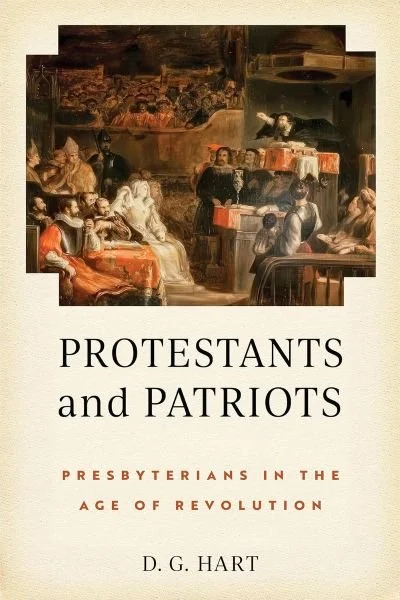
Coming in April from the University of Notre Dame Press is D. G. Hart’s Protestants and Patriots, a look at Presbyterians during the religious wars in England and Scotland, as well as the American Revolution. This is an important topic about which there is much confusion. I’m really looking forward to this one.
________________________________________
From the Publisher
D. G. Hart chronicles the transatlantic history of Presbyterianism as a political movement from the sixteenth to the nineteenth centuries, tracing its evolution into a modern, liberal religion.
Historians have often described Presbyterianism as a political orientation that leads to rebellion and revolution. D. G. Hart interrogates this assumption, presenting instead a complex narrative of Presbyterian understanding of political authority and the role of the church in society.
Synthesizing Presbyterian developments in England, Scotland, Ireland, the United States, and Canada from 1560 to 1870, Hart compellingly explains first why Presbyterianism was politically disruptive in Britain for 150 years and then how these Protestants adjusted to liberal democracy.
The truly revolutionary side of Presbyterianism took place during the religious and parliamentary wars of Scotland and England during the 1630s and 1640s―almost 150 years before the American Revolution. After 1640, Presbyterians remained politically assertive, but switched from state churches and covenanted monarchs to civil and religious liberties and republican government. Even so, fallout from the age of revolution extended to Presbyterian involvement in the American Founding and the formation of the Dominion of Canada.
Ultimately, as a rigorous faith that refused political compromise, Presbyterianism unintentionally laid the groundwork for religious disestablishment and religious freedom. In so doing, Presbyterians became unlikely defenders of liberal democracy.