“Justifying Faith Can Be Lost” — The Rejection of Errors, Fifth Head of Doctrine, Canons of Dort (3)
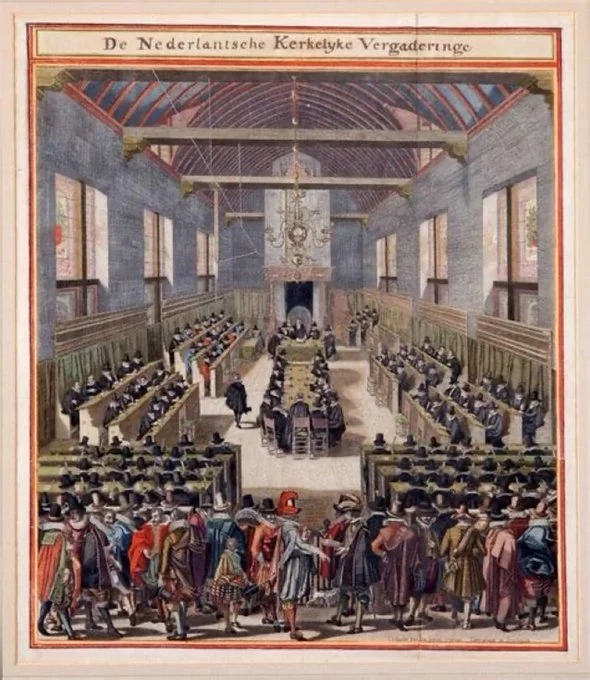
Having set forth the orthodox teaching, the Synod rejects the errors of those
Who teach that those who truly believe and have been born again not only can forfeit justifying faith as well as grace and salvation totally and to the end, but also in actual fact do often forfeit them and are lost forever.
For this opinion nullifies the very grace of justification and regeneration as well as the continual preservation by Christ, contrary to the plain words of the apostle Paul: “If Christ died for us while we were still sinners, we will therefore much more be saved from God’s wrath through him, since we have now been justified by his blood” (Rom. 5:8–9); and contrary to the apostle John: “No one who is born of God is intent on sin, because God’s seed remains in him, nor can he sin, because he has been born of God” (1 John 3:9); also contrary to the words of Jesus Christ: “I give eternal life to my sheep, and they shall never perish; no one can snatch them out of my hand. My Father, who has given them to me, is greater than all; no one can snatch them out of my Father’s hand” (John 10:28–29).
________________________________________
The issue here is, “Can someone who genuinely comes to faith in Christ and is declared righteous (justified) then cease to believe and lose their righteous standing?” The Arminian assumption is “yes.” Those who are truly regenerate and, at a point in time, do possess true faith and are justified can subsequently cease to believe and lose both regeneration and justification. To put it another way, according to Arminianism/semi-Pelagianism, if regeneration results from a human action (faith and repentance), then it is possible to cease believing and lose both regeneration and justification. If salvation is grounded in human freedom, not the grace and mercy of God, then perseverance depends upon human willing as well.
As the 3rd Rejection makes clear, the Arminian error is in direct conflict with Christ’s ongoing priestly, kingly, and prophetic work on behalf of those chosen by the Father, granted the new birth by the Holy Spirit, and who then come to faith. As we have seen, Jesus presently intercedes on behalf of the elect, praying for them and ensuring that they do indeed persevere to the end—as definitively stated in John 10:28–29. Can Jesus’s prayers on behalf of the elect go unanswered? Of course not. The justified persevere because Christ preserves them.
It is important to distinguish the error rejected here from apostasy—someone who falls away from their profession of faith. The Arminian error assumes that a passage like Hebrews 6:4–6 refers to a genuine Christian who loses their salvation when, in fact, the passage actually refers to someone who never possessed salvation.
The apostate of Hebrews 6 is a professing Christian—and, in the context of that epistle, was likely a Jew who renounced their Christian profession to return to Judaism. Such a person possessed what is known as historical or temporary faith. There are indeed people in our churches who profess faith in Christ, who are baptized, and who, for a time, demonstrate Christian affections and manifest good works. But such people do not persevere in faith to the end. This is how they reveal that they are not—and never were—numbered among the elect: they fall away. They have never truly trusted in Christ and are not beneficiaries of his ongoing intercessory work. Such people can and do commit apostasy.
The New Testament warns us about such people in 1 John 2:19: “They went out from us, but they were not of us; for if they had been of us, they would have continued with us. But they went out, that it might become plain that they all are not of us.”