“An Incentive to Godliness” -- Article Twelve, The Fifth Point of Doctrine, Canons of Dort
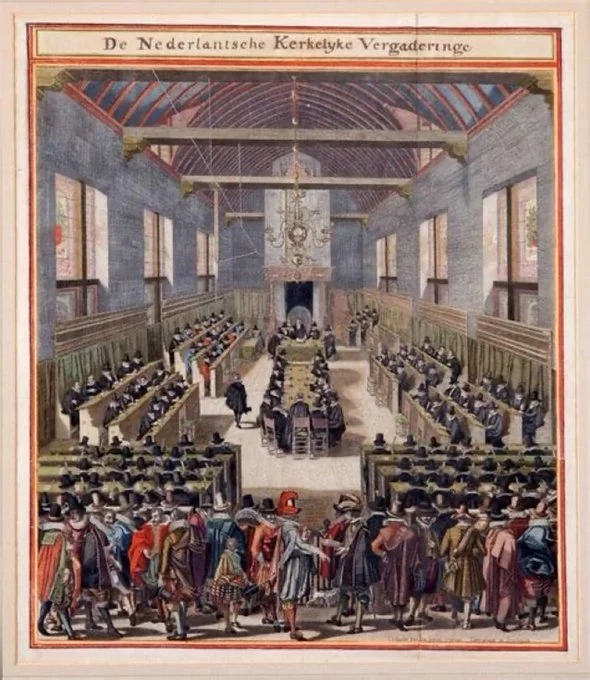
Article 12: This Assurance as an Incentive to Godliness
This assurance of perseverance, however, so far from making true believers proud and carnally self-assured, is rather the true root of humility, of childlike respect, of genuine godliness, of endurance in every conflict, of fervent prayers, of steadfastness in crossbearing and in confessing the truth, and of well-founded joy in God. Reflecting on this benefit provides an incentive to a serious and continual practice of thanksgiving and good works, as is evident from the testimonies of Scripture and the examples of the saints.
__________________________________________
The charge that God’s sovereign grace removes all motives for good works is a longstanding canard raised by those who would base the motives for godly living in the fear of punishment and hope of reward. This matter was addressed in previous heads of doctrine (CD 1.12-13; and CD 3-4.15-17) because it is such a common objection raised by opponents of the Reformed understanding of salvation as monergistic. To put it simply—God does all the saving, of which our repentance and good works are the effects of prior salvation and not the basis for it. And if God does all the saving, and it is purely by grace, the challange arises, “what motivation remains for doing good works?”
The authors of the Canons point out the obvious. Assurance of salvation is the root of true humility, not a basis for boasting. Semi-Pelagian schemes (most notably Roman Catholic and Arminian) which understand salvation as a cooperative act (synergism—God makes his grace available to all who want it) ought to consider the fact that their scheme of salvation actually creates the very boasting they accuse the Reformed of teaching.
If we cannot save ourselves, and if any good we do is the fruit of prior grace and salvation (monergistic), then there is no basis whatsoever for boasting. What do we have to boast about? Nothing. But if grace is merely potential (as semi-Pelagians tell us is the case), then those who come to faith did something about which they can boast—they are the ones who realized that they had it within themselves to act in such a way that they could force God to respond favorably. They can boast that they saved themselves, with God’s help, of course.
Commonly used sermon illustrations illustrate the point rather nicely. “Salvation is like a life preserver thrown to a drowning person. Swim to it and grab on to it before you drown!” Or, “you have a fatal disease–it is up to you to take the medicine which will cure you.” But the Reformed have already established from the Scriptures that it is too late to take such actions by which we can save ourselves. We’ve already drowned, or died from the illness. Those whom God saves are those “dead in sin” (Ephesians 2:1-3; Colossians 2:13), who cannot possibly take a first step toward God until they are made alive by a sovereign act of the Holy Spirit (John 3:5-8).
Once alive in Christ solely because of God’s grace, the resulting assurance of salvation “is rather the true root of humility, of childlike respect, of genuine godliness, of endurance in every conflict, of fervent prayers, of steadfastness in crossbearing and in confessing the truth, and of well-founded joy in God.” The Heidelberg Catechism correctly speaks of the Christian life as one of gratitude, with the particulars of such gratitude spelled out here in terms of humility, a childlikeness in accepting the things of God, endurance (reflecting Romans 5:1-5), and clinging to the truth while living in joy.
And it is clear that “reflecting on this benefit”–freedom from the guilt and power of sin– “provides an incentive to a serious and continual practice of thanksgiving and good works, as is evident from the testimonies of Scripture and the examples of the saints.” Freedom from the guilt and power of sin does not create freedom to sin, but the freedom to obey God and live before him joyfully with a clear conscience.